From Arts to Culinary Storytelling
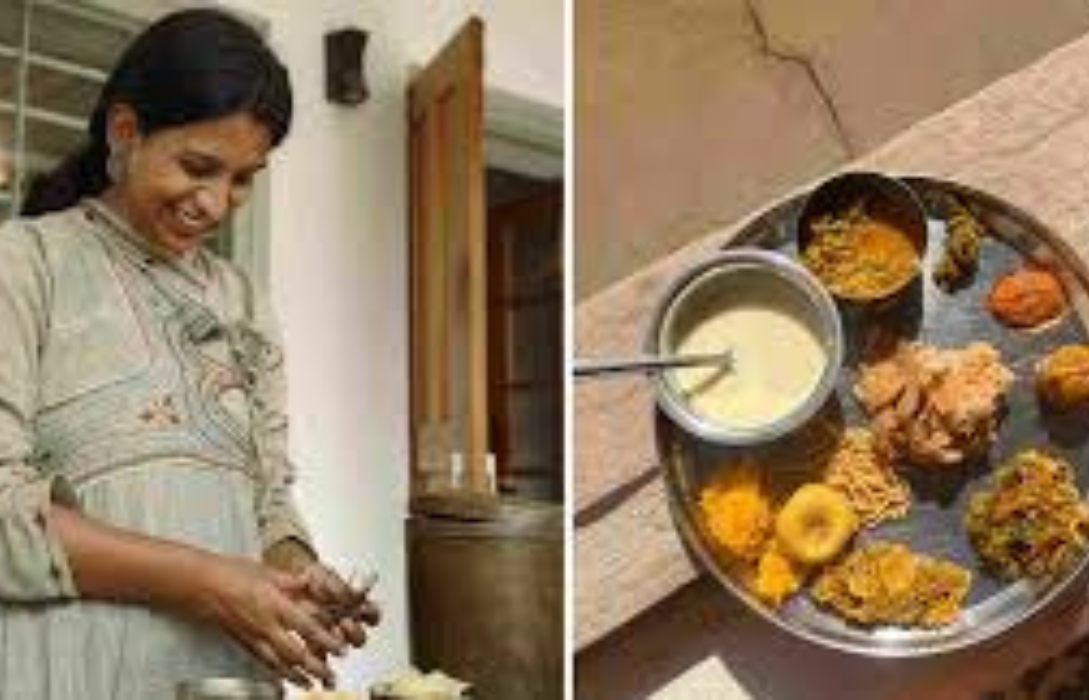
Dipali, a Jaipur-based arts professional, began her journey in rural Rajasthan documenting crafts, music, and folk traditions. Her travels unexpectedly led her to uncover the rich, often overlooked everyday cuisine of the region. This passion evolved into The Kindness Meal, a mission to preserve and celebrate Rajasthan’s diverse culinary heritage, earning her a spot on the Forbes 30 Under 30 Asia list.
Discovering Everyday Culinary Treasures
Seven years ago, Dipali started exploring villages across Rajasthan, initially without the intention of creating a food movement. While working with folk musicians and weavers, she spent long days immersed in village life, sharing meals and traditions.
It was in Manpura Macheri, a small weaving village near Jaipur, that she discovered the subtle brilliance of everyday dishes like aloo-chhole, puri, kheer, festive rice preparations, and aloo parathas. More striking were the foods locals considered “ordinary”, such as chhach-roti—fermented rotis soaked in buttermilk with onions and mint—nutritious, cooling, and gut-friendly, but rarely celebrated outside village life.
Highlighting Forgotten Ingredients
Dipali noticed a pattern: traditional ingredients and dishes were often ignored or undervalued. Urban households replaced bajre ka khichda with instant noodles, and ghee-heavy festive foods gave way to pizza. Some ingredients were forgotten entirely, while others were celebrated only after Western validation, such as millets being recognized internationally.
This realization inspired Dipali to document and protect Rajasthan’s culinary memory.
From a Supper Club to a Cultural Mission
In 2022, Dipali hosted a one-off supper club, showcasing Rajasthan’s regional produce through a five-course sensory experience. Initially meant to be a single event, it became the foundation of The Kindness Meal movement.
She traveled deeper into regions like Shekhawati, Ganganagar, Hanumangarh, Sirohi, Jalor, and villages along the Pakistan border, discovering hidden culinary gems:
-
Water chestnut pickles in Dholpur
-
Sindhi-influenced seeds for Ramadan halwas
-
Thor ki Paatdi, a cactus-like succulent used in pickles and joint-pain remedies
-
Bandar ki roti seeds, once treasured by children, now largely forgotten
Documenting Rajasthan’s Culinary Heritage
Dipali has now divided Rajasthan into nine cultural zones, cataloging 65 rare ingredients and over 10,000 traditional recipes. Her team is creating a digital repository detailing ingredient histories, cooking methods, and linked recipes, while also encouraging visitors to experience these foods within local communities.
She emphasizes the importance of hands-on learning: “Recipes online don’t explain that kumatiya must be soaked overnight or its water drained multiple times. Cooking in a home reveals the wisdom behind these practices.”
Immersive Culinary Experiences
Dipali’s initiatives include:
-
Food walks exploring Jaipur’s Muslim cuisine
-
Visits to Jain and Baniya kitchens
-
Foraging trips for desert greens
-
Village stays with authentic home-cooked meals
These experiences aim to reconnect people with their food heritage and preserve regional culinary traditions.
A Call to Protect India’s Culinary Diversity
Dipali warns that homogenization threatens India’s food identity. When traditional dishes are replaced by international trends, cultural diversity is lost. For her, Forbes 30 Under 30 recognition is not personal—it is a spotlight on India’s fragile, magnificent culinary legacy.
She concludes: “Every region is a country in itself. If we don’t protect our everyday food, we lose a part of who we are.”